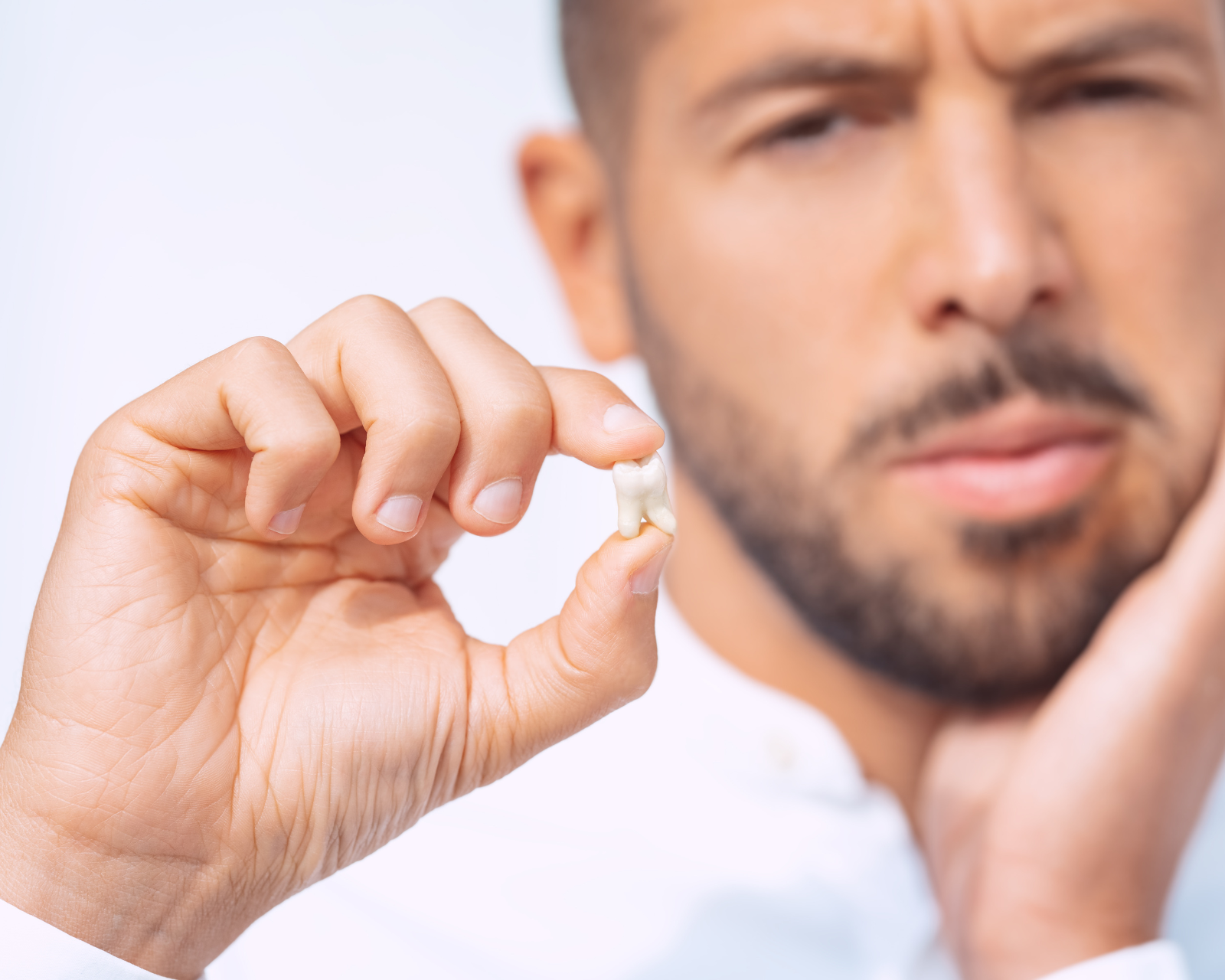

If you’ve ever asked, “Can removing a tooth affect your overall health?” you’re thinking about dentistry the way we do at Natural and Cosmetic Dentistry in Clearwater, FL: as something connected to your whole body, not just your smile.
Sometimes removing a tooth is the healthiest choice—especially when a tooth is badly infected, fractured, or can’t be restored predictably. Other times, the bigger issue isn’t the extraction itself…it’s what happens before (chronic infection) and after (how the site heals, how your bite changes, and whether the missing tooth is replaced).
Dr. Beata Carlson, Dr. Michael “Mikey” Thomas, and Dr. Lewis Luo take a biological, whole-person approach to extractions and treatment planning. That means we consider your mouth, your immune system, your bite, your airway, and your long-term comfort—not just “getting the tooth out.”
Let’s walk through the most important ways a tooth extraction can influence your overall health, and what you can do to support a healthy outcome.
Why a tooth might need to be removed in the first place
A tooth extraction is usually recommended when keeping the tooth would create more risk than benefit. Common reasons include:
- A deep infection that can’t be treated conservatively
- A severe crack or fracture below the gumline
- Advanced gum disease with significant bone loss
- A tooth that can’t be restored with a filling or crown
- A problematic wisdom tooth (decay, impaction, recurrent inflammation)
In these cases, removing the tooth may actually lower your body’s inflammatory burden by eliminating a source of chronic irritation.
So yes—can removing a tooth affect your overall health? Absolutely. But it can be a positive change when it removes an ongoing problem.
How a missing tooth can change chewing, digestion, and nutrition
Teeth are part of the first stage of digestion. When you lose a tooth—especially a molar—you may:
- Chew less efficiently on one side
- Avoid certain foods (raw veggies, nuts, meats)
- Swallow larger pieces of food
- Experience more jaw fatigue while eating
Over time, this can influence food choices and nutrition quality. Many patients don’t notice it immediately; it shows up gradually as “I just don’t eat that anymore.”
If the extracted tooth is not replaced, chewing patterns often shift—and your muscles, joints, and bite adapt around the gap.
Bone changes: the jaw needs stimulation to stay strong
Your jawbone is living tissue. It stays dense because your tooth roots (and the pressure from chewing) stimulate the bone.
After a tooth is removed, the body no longer receives the same stimulation in that area, and bone volume can decrease over time. That can affect:
- The stability of nearby teeth
- The way your bite fits together
- The shape of the smile and facial support (especially with multiple missing teeth)
This is one reason we often discuss replacement options—because replacing a tooth isn’t only cosmetic. It can be functional and protective long-term.
Bite changes can affect the TMJ, muscles, and posture
When a tooth is missing, teeth can shift:
- The opposing tooth may “over-erupt” into the space
- Neighboring teeth may tip or drift
- Your bite can become uneven
An uneven bite may contribute to:
- Jaw tension or muscle fatigue
- Clenching or grinding
- TMJ discomfort in some patients
- Head and neck strain (especially if you’re already sensitive)
This doesn’t happen to everyone—but it’s one of the main “whole-body” reasons we don’t treat extractions as isolated events. In our holistic planning, we consider function, stability, and the long-term balance of your mouth and body.
The healing site matters more than most people realize
Here’s the part many patients miss when asking, “Can removing a tooth affect your overall health?”
Sometimes, the biggest impact comes from how the extraction site heals.
When a tooth is removed—especially if there was infection around the root—your body has to heal bone and soft tissue. In biological dentistry, we focus on supporting that healing process with careful technique and supportive therapies.
Depending on your situation, our doctors may incorporate steps like:
- Thorough cleaning of the socket
- Ozone support to help disinfect and encourage healthy healing
- PRF (platelet-rich fibrin) to support tissue and bone healing
Not every patient needs every step, but the principle stays the same: the goal isn’t just removal—it’s healthy resolution.
When extraction can support whole-body wellness
In many cases, removing a chronically infected or broken-down tooth can be a relief for the body.
Patients sometimes report improvements like:
- Less jaw pressure or facial tension
- Fewer flare-ups of gum inflammation in that area
- Improved comfort when chewing
- A sense of “less stress” in the body (especially when infection has been lingering)
To be clear: dentistry is not a replacement for medical care, and symptoms can have many causes. But from a holistic standpoint, eliminating a constant source of irritation in the mouth may reduce one piece of the body’s overall inflammatory load.
Should you replace the tooth? Options that support whole-body goals
If you’re missing a tooth (or are planning an extraction), replacement is worth discussing—especially if it’s a back tooth used for chewing.
At Natural and Cosmetic Dentistry, we may discuss biocompatible options such as:
- Non-metal (zirconia/ceramic) implants
- Non-metal bridges
- Thoughtfully designed partial dentures
The “right” choice depends on your health history, your bite, the location of the missing tooth, bone levels, and your goals.
Supporting your mouth at home while you heal
Your home care matters—especially during and after healing. We’re big believers in routines that support the oral environment without being harsh.
Many patients in our office prefer fluoride-free, microbiome-friendly products that still support enamel and gum comfort, such as:
- A fluoride-free toothpaste with nano-hydroxyapatite to support enamel and sensitivity-friendly whitening
- An alcohol-free mouthwash with nano-silver antimicrobial support and nano-hydroxyapatite for enamel support
- A concentrated botanical option for gum comfort and fresh breath support (for targeted areas, as directed)
(And if you like a simple routine, our “system” bundles these into one easy set—but the most important thing is consistency and gentleness.)
FAQs
Can removing a tooth affect your overall health right away?
Sometimes, yes—especially if the tooth was infected or painful. But many effects are gradual (bite changes, shifting, chewing habits), which is why follow-up planning matters.
Is it always bad to remove a tooth?
Not at all. When a tooth is a chronic source of infection or can’t be restored safely, removal may be the healthiest step.
How do I know if I should replace a missing tooth?
A good rule: if the tooth is involved in chewing or maintaining your bite, replacement is often worth considering. We’ll evaluate your bite, spacing, bone, and long-term stability before recommending anything.
The bottom line
So—can removing a tooth affect your overall health? Yes. It can influence chewing, nutrition, jawbone, bite stability, and how much stress your immune system is managing, especially if infection is involved.
The best outcomes come from:
- Removing the tooth thoughtfully (not rushed)
- Supporting clean, healthy healing
- Planning for bite balance and tooth replacement when appropriate
Call Our Office For More Information
If you’re deciding whether to remove a tooth—or you already have and want to protect your long-term health—our team is here to help you think it through clearly.
Natural and Cosmetic Dentistry
1825 Sunset Point Road, Clearwater, FL
Contact Us: 727-888-6523 – BOOK AN APPOINTMENT
Dr. Beata Carlson, Dr. Michael “Mikey” Thomas, and Dr. Lewis Luo will review your options and help you choose a plan that supports both your smile and your overall wellness.
