

Dentures vs Partial Dentures: Which Option Is Right for You?
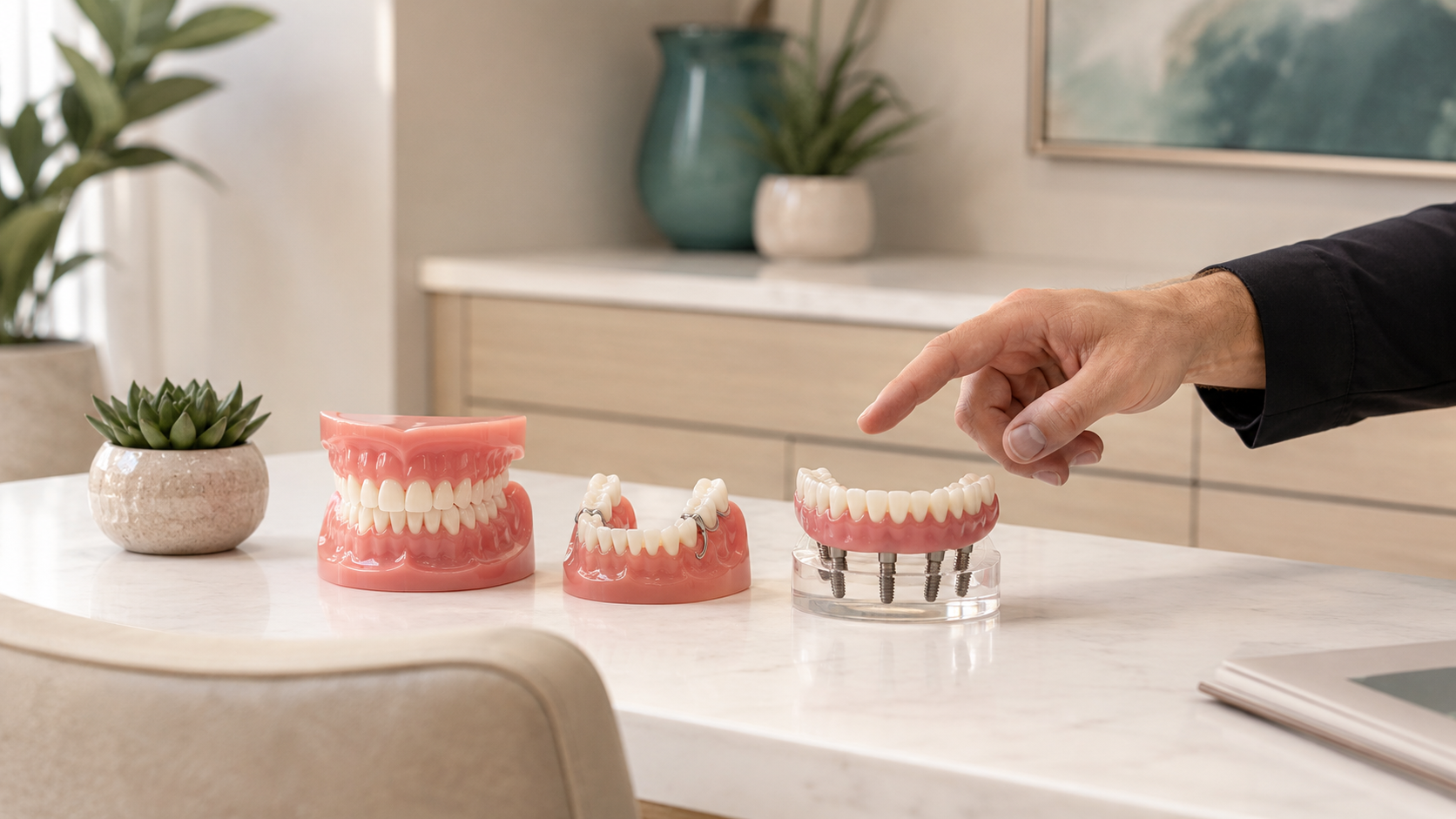
Dentures vs partial dentures is one of the first questions patients ask when they are missing teeth or know extractions may be needed. The difference is simple: full dentures replace all teeth in an upper or lower arch, while partial dentures replace some missing teeth when healthy natural teeth remain.
The better choice depends on your current teeth, gum health, bone support, bite, comfort goals, budget, and whether you want a removable or implant-supported option. At Natural and Cosmetic Dentistry in Clearwater, we help patients compare tooth replacement options in a way that feels clear, calm, and personalized.
Missing teeth can affect more than your smile. They can change how you chew, speak, digest food, and feel in social situations. The right replacement can restore confidence while supporting your overall oral health.
Dentures vs Partial Dentures: The Main Difference
Full dentures are designed for patients who are missing all teeth in the upper jaw, lower jaw, or both. They rest on the gums and are shaped to restore the appearance of a complete smile.
Partial dentures are used when some natural teeth remain. They fill the spaces left by missing teeth and usually attach around existing teeth for support.
In simple terms:
Full dentures replace a full arch of teeth.
Partial dentures replace only the missing teeth while preserving healthy natural teeth.
Both options can be customized for a natural look. Both can improve chewing and speech. The biggest difference is whether your remaining teeth are strong enough and healthy enough to keep.
When Full Dentures May Be Recommended
Full dentures may be the right choice when most or all teeth in an arch are missing, severely damaged, loose, infected, or no longer predictable long term.
You may be a candidate for full dentures if you have:
- Multiple failing teeth
- Advanced gum disease
- Severe tooth mobility
- Extensive decay
- Broken teeth that cannot be restored
- A full arch already missing
- A desire for a complete smile replacement
Full dentures can be traditional removable dentures or implant-supported dentures. Implant-supported options often provide more stability, especially for lower dentures, which can be harder to keep secure due to tongue movement and less natural suction.
When Partial Dentures May Be Recommended
Partial dentures may be a better fit if you still have healthy teeth that can support your bite and help anchor the appliance.
You may be a candidate for partial dentures if you have:
- Several missing teeth but not a full arch
- Healthy remaining teeth
- Good enough gum and bone support
- Spaces that affect chewing or appearance
- A need for a more budget-conscious replacement option
- A desire to avoid removing teeth that can still be saved
Partial dentures help prevent nearby teeth from shifting into empty spaces. They can also improve chewing balance and fill visible gaps in the smile.
Dentures vs Partial Dentures: Comfort and Fit
Comfort depends on design, materials, fit, bite alignment, and how well your mouth adapts. A well-made denture should not feel bulky, painful, or unstable once properly adjusted.
Full dentures may take more time to get used to because they cover a larger area. Upper dentures often feel more stable because they can use suction against the palate. Lower dentures can move more easily, which is why implants may be discussed for added support.
Partial dentures can feel easier for some patients because natural teeth help stabilize them. However, they still require careful design so they do not place too much pressure on the remaining teeth.
At Natural and Cosmetic Dentistry, we also consider gum comfort, bite forces, jaw position, and tissue health. Dentures should not only look good. They should support function and feel as natural as possible.
What About Implant-Supported Dentures?
For many patients, the conversation is not only dentures vs partial dentures. It is also removable dentures vs implant-supported dentures.
Implant-supported dentures attach to dental implants placed in the jawbone. This can provide better stability, improved chewing strength, and less slipping compared to traditional removable dentures.
Benefits may include:
- More secure fit
- Better chewing ability
- Less movement while speaking
- Improved confidence
- Better support for the jawbone compared to removable dentures alone
- A more natural feel for many patients
Dr. Lewis Luo and Dr. Michael “Dr. Mikey” Thomas may discuss implant-supported options when they fit the patient’s health, bone support, and goals. For patients who want a more stable long-term solution, implants can make a meaningful difference.
Dentures vs Partial Dentures: Appearance
Modern dentures and partial dentures can look much more natural than many people expect. Teeth can be shaped, shaded, and arranged to complement your face, smile line, lips, and personality.
A good denture should not look overly flat, bulky, or artificial. It should restore facial support without making the mouth look “too full.”
Partial dentures are designed to blend with your remaining teeth. If your natural teeth are worn, discolored, or uneven, we may also discuss cosmetic improvements or restorative care to help the full smile look balanced.
What Is the Process Like?
Your process depends on whether teeth need to be removed, whether you are choosing removable or implant-supported dentures, and whether you need gum treatment first.
A typical process may include:
Consultation and Exam
We evaluate your teeth, gums, bite, bone support, smile goals, and overall oral health. This is where we talk through your concerns and compare options.
Imaging and Planning
Digital imaging may be used to assess bone levels, tooth stability, and implant candidacy when needed.
Treatment Sequencing
If extractions, gum therapy, or restorative care are needed, we plan the order carefully. In holistic dentistry, timing matters because healing, inflammation, and comfort all affect the outcome.
Denture Design
Your denture or partial denture is designed for fit, function, and appearance. We consider tooth shade, shape, bite, and how the appliance supports your facial structure.
Fitting and Adjustments
Most dentures need adjustments. This is normal. Small pressure spots can develop as your gums adapt, and fine-tuning helps improve comfort.
Dentures vs Partial Dentures: Cost Considerations
Cost depends on the type of appliance, materials, number of missing teeth, whether extractions are needed, whether implants are involved, and whether gum or restorative treatment is recommended first.
Partial dentures are often less expensive than full dentures because they replace fewer teeth, but this is not always the case. Implant-supported dentures usually cost more upfront than removable dentures, but many patients choose them for added stability and long-term function.
The best way to understand your cost is to schedule an evaluation and receive a personalized treatment plan. We can also discuss insurance and payment options when applicable.

A Holistic Look at Tooth Replacement
Tooth replacement is not just about filling spaces. Missing teeth can affect the bite, jaw joints, digestion, speech, facial support, and gum health. Poorly fitting dentures can irritate tissue, create sore spots, and make it harder to eat nutritious foods.
A holistic approach looks at:
- Gum and bone health
- Bite balance
- Biocompatible material considerations
- Oral inflammation
- Comfort and function
- Long-term stability
- Patient confidence and quality of life
Dr. Beata Carlson and the team at Natural and Cosmetic Dentistry approach dentures and partial dentures with whole-mouth health in mind. The goal is to replace missing teeth in a way that supports comfort, appearance, and long-term wellness.
How to Know Which Option You Need
You may need full dentures if all teeth in an arch are missing or cannot be predictably saved.
You may need partial dentures if you still have healthy teeth that can remain and support the appliance.
You may want implant-supported dentures if you want more stability and qualify for dental implants.
You may need a different option entirely, such as bridges or individual implants, if only one or a few teeth are missing.
That is why a consultation is so important. Dentures vs partial dentures is not only about how many teeth are missing. It is about what will give you the healthiest, most comfortable, and most confident result.
FAQs
Are partial dentures better than full dentures?
Partial dentures are better when healthy natural teeth remain and can be preserved. Full dentures are better when all teeth in an arch are missing or no longer stable. The right choice depends on your mouth.
Can partial dentures damage natural teeth?
A well-designed partial denture should protect function, but poor fit or excess pressure can stress supporting teeth. Regular checkups help make sure the appliance stays comfortable and stable.
Do full dentures look natural?
Yes, modern full dentures can look very natural when they are customized to your face, smile, and bite. Tooth shape, color, and arrangement all matter.
Are dentures uncomfortable?
Dentures may feel unfamiliar at first, but they should not cause ongoing pain. Adjustments are common during the healing and adaptation period.
Can I eat normally with dentures?
Most patients can eat many foods with dentures, but it takes practice. Implant-supported dentures usually offer stronger chewing support than traditional removable dentures.
How long do dentures last?
Dentures often need replacement or relining over time because the gums and bone change. Regular dental visits help maintain fit and comfort.
Can I sleep with dentures in?
Many patients are advised to remove dentures at night to give gum tissue a rest. Your dentist will give specific guidance based on your appliance and oral health.
What if I am embarrassed about needing dentures?
You are not alone. Many patients feel nervous at first, but replacing missing teeth can be a positive step toward better comfort, confidence, and health. Our team keeps the process respectful and supportive.
Ready to Compare Your Tooth Replacement Options?
Dentures vs partial dentures becomes much easier to understand when you know what is happening with your teeth, gums, bone, and bite. Whether you need a full smile replacement, a partial denture, or want to compare implant-supported options, Natural and Cosmetic Dentistry in Clearwater can help you make a confident decision.
Our team will walk you through your choices, answer your questions, and create a plan that fits your health, appearance, comfort, and lifestyle.
