
If you have heard that a toothpaste, peptide, mineral treatment, or new dental technology can “regrow enamel,” it is important to understand what that phrase actually means.
Enamel can sometimes be remineralized when damage is early and the surface is still intact. Enamel that has been physically worn away, broken, or lost to a cavitated lesion does not currently grow back on its own.
That distinction is central to biomimetic dentistry. Biomimetic care does not promise that a large cavity will disappear or that a missing layer of enamel will naturally return. It combines prevention, early mineral support, conservative treatment, and restorations designed to behave more like the tooth they are protecting.
Quick answer: Early, non-cavitated enamel demineralization may be able to reharden through remineralization. Once there is a physical hole, fracture, or meaningful loss of tooth structure, the tooth generally needs professional restoration. Research into true enamel regeneration is promising, but it is not yet a routine clinical treatment.
Why Mature Enamel Does Not Simply Grow Back
Enamel is the highly mineralized outer layer of a tooth. During tooth development, specialized cells called ameloblasts build its organized crystal structure. Those cells are lost after the tooth erupts.
Mature enamel is therefore acellular. It contains no living cells that can rebuild a missing section in the way bone can remodel after an injury.
This does not mean enamel is completely passive. The surface is in constant contact with saliva, plaque biofilm, foods, drinks, and oral-care products. Minerals can move out of enamel during an acid challenge and move back into an early lesion when conditions become favorable.
That repair process is remineralization, not full biological regrowth.
Remineralization, Repair, and Regeneration Are Not the Same
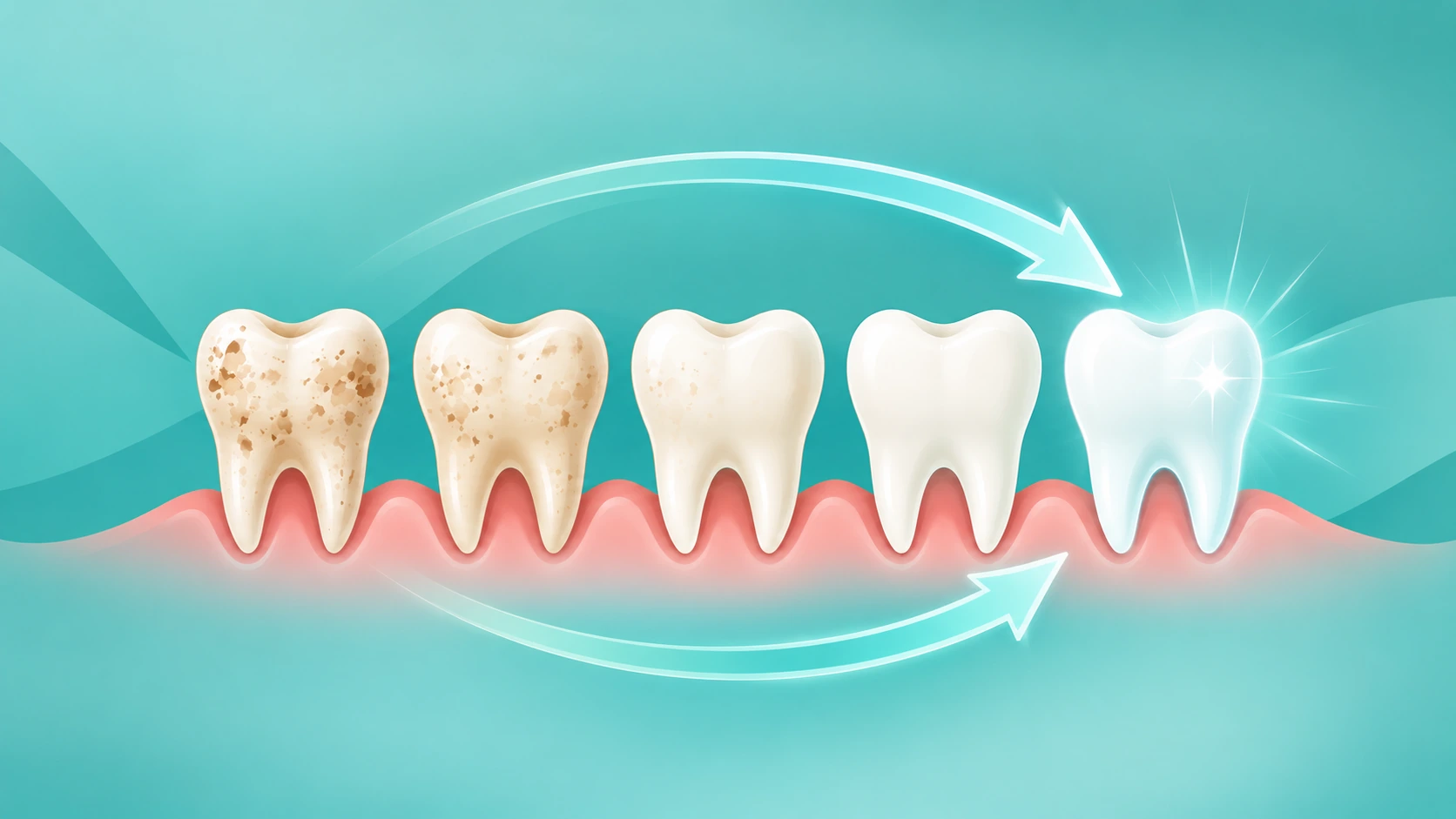
Remineralization means returning minerals to enamel that has begun to soften or lose mineral content. This is most realistic in an early lesion with an intact surface, sometimes seen clinically as a white spot.
Biomimetic repair means preserving healthy tooth structure and replacing what cannot be saved with bonded materials selected and layered to imitate important properties of natural dentin and enamel. The goal is a well-sealed, strong, functional restoration with less unnecessary drilling.
True enamel regeneration would recreate the architecture, thickness, and mechanical behavior of natural enamel after substantial tissue has been lost.
Scientists are studying enamel-forming cells, protein-guided mineralization, self-assembling peptides, hydrogels, and calcium-phosphate systems. These approaches are scientifically exciting, but they should not be presented as a routine way to regrow a large cavity or rebuild a broken tooth today.
What Current Enamel Research Can Do Today
The strongest practical opportunity is early intervention.
When the outer surface is still intact, the dental team may be able to monitor the area and improve the balance between mineral loss and mineral return.
The plan depends on where the lesion is, how active it is, the patient’s cavity risk, saliva flow, oral pH, and whether the area can be kept clean.
Mineral Support and Nano-Hydroxyapatite
Hydroxyapatite is a calcium-phosphate mineral closely related to the mineral in teeth.
Nano-hydroxyapatite is used in some toothpastes and professional products to support mineral deposition on early enamel lesions and help reduce sensitivity by interacting with microscopic surface irregularities.
Human and laboratory studies are encouraging, but formulas, concentrations, study designs, and outcomes vary. It is best described as an enamel-supportive option, not a way to replace missing tooth structure.
Self-Assembling Peptides
Self-assembling peptides such as P11-4 are designed to form a scaffold within an early lesion that encourages calcium-phosphate mineral formation.
Clinical studies and systematic reviews suggest promise for non-cavitated lesions. The evidence does not justify treating the technology as a universal substitute for fillings, and it is not intended to reconstruct a large defect.
Protein-Guided and Cell-Based Regeneration
Researchers are also studying amelogenin-inspired proteins and peptides, mineralizing hydrogels, and ways to create enamel-producing cells.
Some laboratory systems have formed enamel-like mineral layers or guided cells toward an ameloblast-like state. These findings help scientists understand how future regenerative therapies might work, but they remain experimental.
They are not the same as regrowing mature enamel in a dental office.
The Holistic Factors That Influence Enamel Balance
A biological or holistic view looks beyond the visible spot on one tooth.
Enamel breakdown is influenced by the environment around the tooth. The same person may experience repeated demineralization if the underlying pattern is not addressed.
Saliva is one of the mouth’s most important protective systems. It helps wash away debris, buffer acids, and supply calcium and phosphate.
Dry mouth caused by medications, dehydration, mouth breathing, medical conditions, or reduced salivary flow can shift the balance toward mineral loss.
Frequency matters as much as quantity. Repeated sipping or snacking can create frequent acid challenges, especially when drinks are acidic or carbohydrates are available to acid-producing bacteria.
Giving the mouth time to recover, drinking water, and reducing repeated exposures can support a healthier pH pattern.
The oral microbiome also matters, but the goal is not to sterilize the mouth. Plaque control, diet, saliva, and professional care work together to reduce harmful activity while supporting a stable oral environment.
A holistic plan may also consider acid reflux, airway and mouth-breathing patterns, grinding, brushing technique, and the fit or condition of existing dental work.
Nutrition supports normal saliva, immune function, and overall oral health. Adequate protein and appropriate intake of minerals and vitamins are important for the body, especially while teeth are developing.
However, no food, supplement, oil, or home remedy can rebuild enamel that has already been physically lost. That claim goes beyond the evidence.

Where Biomimetic Dentistry Fits
Biomimetic dentistry respects the difference between what can be supported and what must be restored.
If enamel is only beginning to demineralize, conservative monitoring and remineralization may be appropriate.
If decay has created a cavity, the goal shifts to removing diseased tissue as precisely as possible, preserving the strong parts of the tooth, sealing the tooth carefully, and restoring its natural function.
Depending on the tooth, this may involve a small bonded restoration, an inlay or onlay, or another tooth-conserving option.
Biomimetic treatment planning also considers stress. Teeth flex under chewing forces, so restorative materials, bonding protocols, and design all influence how the repaired tooth handles those forces over time.
Biomimetic does not mean “no drilling,” and it does not mean every tooth can be saved. It means using the least invasive treatment that can predictably control disease and protect the tooth.
Deep cracks, advanced decay, infection, or major structural loss may require a different plan.
Can You Tell From a Photo Whether Enamel Can Remineralize?
No.
A social-media photo or description cannot show the full depth and activity of a lesion, the integrity of the surface, what is happening between the teeth, or whether there is an underlying crack or infection.
We do not diagnose dental conditions from photographs on the internet, even when an area looks simple.
An in-person examination and appropriate imaging or diagnostic testing are needed before recommending monitoring, remineralization, or restoration.
How We Evaluate Enamel Changes
At Natural and Cosmetic Dentistry, we look at the tooth and the conditions around it.
That may include a clinical examination, cavity-detection technology or imaging when appropriate, saliva and dry-mouth factors, pH and dietary patterns, home care, bite stress, and the condition of older fillings or crowns.
The purpose is to determine whether the area is stable, actively losing minerals, already cavitated, or structurally compromised.
From there, we can explain what may be monitored, what may benefit from mineral support, and what needs treatment.
This is how holistic thinking and biomimetic dentistry work together: understand the cause, preserve what is healthy, and restore only what cannot heal on its own.
Frequently Asked Questions
Can enamel grow back naturally?
Mature enamel cannot biologically regrow after it has been physically lost because the enamel-forming cells are no longer present. Early mineral loss may sometimes be remineralized while the surface remains intact.
Can nano-hydroxyapatite rebuild enamel?
Nano-hydroxyapatite may support the remineralization of early enamel changes and may help with sensitivity. It cannot rebuild a large cavity, replace a broken cusp, or recreate the full architecture of missing enamel.
Can a cavity heal without a filling?
An early, non-cavitated lesion may sometimes be arrested or remineralized.
Once decay has created a physical hole, professional restorative treatment is usually needed. Whether the surface is still intact cannot be determined reliably from a photo.
Is biomimetic dentistry the same as enamel regeneration?
No. Biomimetic dentistry includes conservative prevention and mineral support, but it also uses bonded restorations to reproduce important natural properties when tooth structure has already been lost.
Enamel regeneration is one area of ongoing research within the broader biomimetic field.
What is the best way to protect enamel?
The best plan is individualized. It may include gentle twice-daily brushing, cleaning between the teeth, limiting frequent acid and sugar exposure, supporting saliva flow, using an appropriate remineralizing product, and keeping regular professional examinations.
Existing erosion, white spots, sensitivity, and decay should be evaluated in person.
The Bottom Line
Enamel science is advancing, but honest language matters.
Early mineral loss can sometimes be reversed or stabilized. Missing enamel does not currently grow back naturally.
Biomimetic dentistry bridges that gap by supporting remineralization when possible and using conservative, life-like restorations when repair is necessary.
If you are concerned about white spots, enamel wear, sensitivity, or repeated cavities, schedule an in-person evaluation with Natural and Cosmetic Dentistry in Clearwater, Florida.
We can determine what is happening beneath the surface and create a plan that respects both your natural tooth structure and your whole-body health.
