
Can Toothpaste Cause Acne?
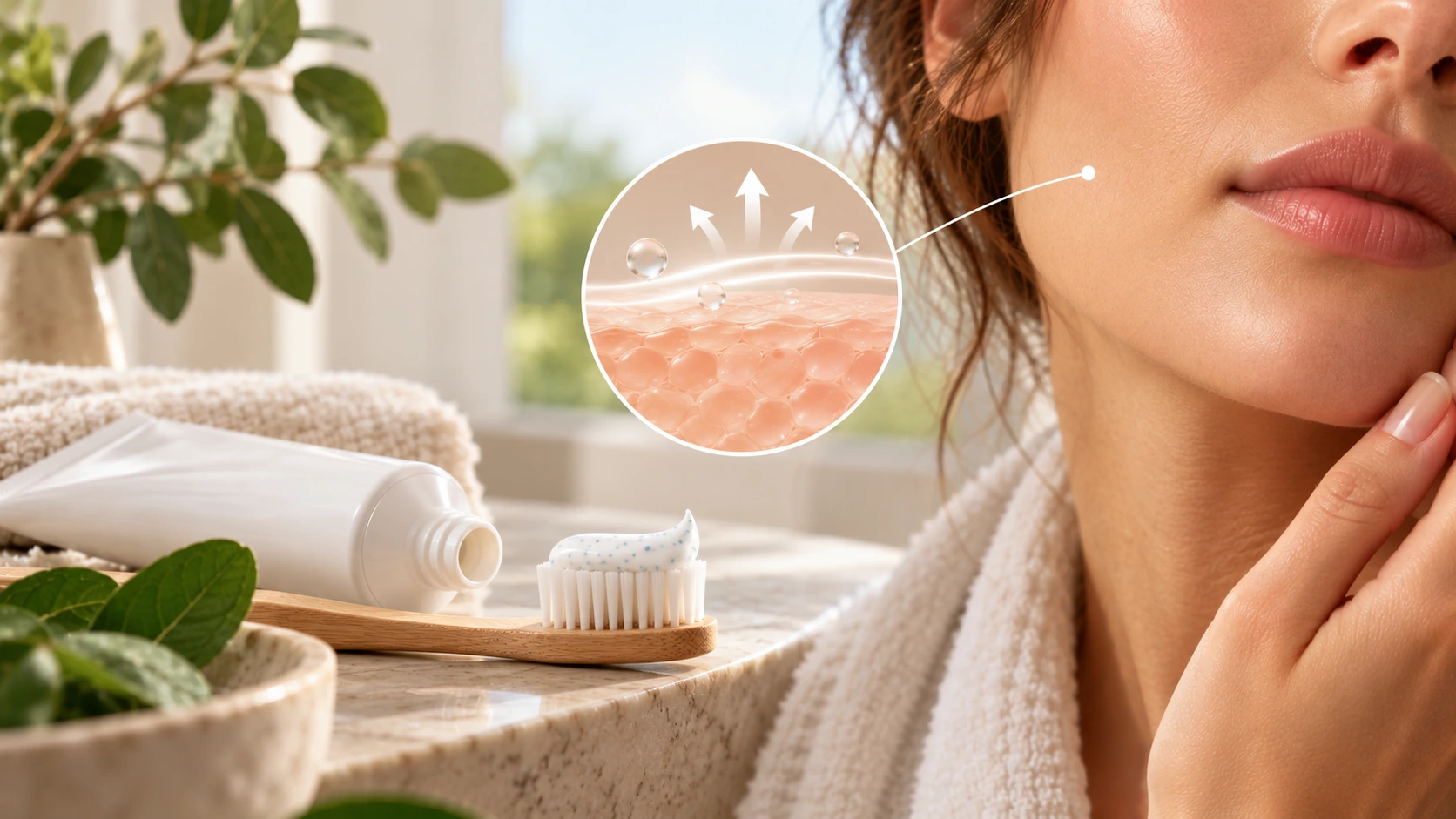
We usually choose toothpaste by thinking about cavities, whitening, fresh breath, or sensitivity. But toothpaste does not stay neatly on the teeth. Every time we brush, foam and rinse water touch the lips, the corners of the mouth, and the skin of the chin. If residue remains there, the same ingredients are applied to that delicate area again and again throughout the day.
So, can toothpaste cause acne? For reactive or acne-prone skin, repeated exposure to certain toothpaste ingredients may matter. Detergents, flavorings, dyes, abrasives, and other additives can irritate the skin barrier and contribute to inflammation. The result may be dryness, burning, redness, or clusters of bumps around the mouth.
Sometimes toothpaste may aggravate true acne. In other cases, the problem may actually be irritant contact dermatitis, allergic contact dermatitis, or perioral dermatitis that looks remarkably similar to acne. The label may differ, but the common thread is repeated exposure followed by irritation and inflammation.
The Skin Barrier Is Your First Line of Defense
The outer layer of the skin is not simply a covering. It is a carefully organized barrier made of skin cells and protective lipids. It helps hold moisture in while keeping irritants, allergens, and microorganisms out. Healthy skin can tolerate ordinary daily exposure without becoming inflamed.
When a strong surfactant or sensitizing flavor repeatedly sits on the skin, that barrier can begin to weaken. Water escapes more easily, the skin becomes dry and reactive, and ingredients can penetrate more readily. Local immune activity may then contribute to inflammation. This is why irritation may begin as tightness or burning and later develop into redness, scaling, papules, pustules, or a persistent ring of bumps around the mouth.
Research commonly uses sodium lauryl sulfate (SLS) to produce controlled skin irritation in studies because it can increase water loss, redness, dryness, and barrier disruption. In toothpaste, exposure is shorter and the formula is diluted by saliva and water, but contact is also repeated and can reach delicate facial skin.
How Toothpaste Irritation Can Turn Into Breakouts
Acne develops inside the hair follicle. Oil, dead skin cells, microbial activity, and inflammation all influence whether a follicle remains clear or becomes a comedone, papule, or pustule. A damaged skin barrier does not automatically create acne in every person, but it can make an acne-prone area much easier to inflame.
When toothpaste residue dries on the chin or around the mouth, an irritating formula can create low-grade inflammation around nearby follicles. The skin may become drier or more reactive to skincare and makeup. Existing acne may flare, and new inflamed bumps may appear in the same areas where toothpaste foam tends to run or collect.
Perioral dermatitis is another important look-alike. It often appears as small red or skin-colored bumps, sometimes accompanied by tiny pustules, dryness, burning, or flaking around the mouth and chin. Because it resembles acne, people may reach for aggressive acne products that further irritate the skin barrier and make the cycle worse.
Toothpaste and Mouthwash Ingredients Worth Examining
1. Sodium Lauryl Sulfate (SLS)
Sodium lauryl sulfate, commonly shortened to SLS, is a detergent that creates the abundant foam many people associate with cleaning. Foam itself is not what removes plaque, however. In sensitive mouths, sodium lauryl sulfate can feel drying or irritating. On facial skin, it may disturb the skin barrier and increase irritation. If breakouts cluster at the corners of the mouth or along the chin, trying a sodium lauryl sulfate-free toothpaste is a reasonable first change.
2. Strong Flavors and Fragrance Compounds
Mint, menthol, peppermint, cinnamon, spearmint, and related flavor compounds make oral-care products feel fresh. They can also cause reactions in people who are sensitive to particular flavoring ingredients. A natural ingredient can still be too stimulating for reactive skin, so gentleness matters more than whether a flavor is labeled natural or synthetic.
3. Fluoride Compounds
Published case reports have linked highly fluoridated dentifrice with perioral dermatitis in susceptible individuals. This does not mean everyone using fluoride toothpaste will develop a skin problem. It does mean toothpaste is one of the exposures worth examining when a persistent eruption is concentrated around the mouth.
For patients looking for a fluoride-free alternative, nano hydroxyapatite can provide an enamel-supportive option. You can also read our guide to choosing a non-toxic toothpaste for adults.
Other Ingredients That May Be Worth a Second Look
4. Artificial Dyes
Bright stripes and artificial colors do not improve cleaning or strengthen enamel. They simply add another contact exposure to the lips and surrounding skin. For someone already dealing with irritation or breakouts, removing nonessential dyes can reduce the number of variables the skin has to tolerate.
5. Harsh Whitening Abrasives
Abrasives help polish away surface stains, but an overly abrasive paste can feel gritty and drying. Residue combined with vigorous wiping around the mouth may add mechanical irritation to chemical irritation. A gentler polishing system may be a better fit for sensitive teeth, thin enamel, recession, or reactive skin.
6. Strong Mouthwash Ingredients
Mouthwash can reach the corners of the mouth and chin just as easily as toothpaste. Alcohol, intense flavoring, essential oils, surfactants, and dyes may sting or dry sensitive skin when residue is left behind. More antibacterial power is not always better. A holistic approach aims to manage harmful biofilm while respecting the oral tissues and the balance of the oral microbiome.
What Does a More Skin-Conscious Toothpaste Look Like?
If you suspect your toothpaste may be contributing to irritation, simplifying the formula can make it easier to identify potential triggers. Look for a toothpaste without sodium lauryl sulfate (SLS), artificial dyes, or unnecessarily aggressive abrasives.
Natural Smile Essentials Whitening Toothpaste is fluoride-free, sodium lauryl sulfate-free, and dye-free. It uses nano hydroxyapatite for enamel support along with gentle polishing and botanical ingredients. For someone trying to simplify an oral-care routine while still supporting enamel and daily cleaning, it offers a gentler alternative to formulas built around heavy foaming or harsh whitening ingredients.
Why a Holistic Dental Office Pays Attention to the Skin
The mouth, lips, and facial skin form one connected boundary. They share constant exposure to saliva, food, personal-care products, microorganisms, and the environment. A toothpaste may support the teeth while still being a poor match for someone’s soft tissues or skin. That is why product selection should consider the whole person, not only how white or foamy the teeth look after brushing.
Our preference is to remove unnecessary irritants and choose ingredients that serve a clear purpose. A thoughtful toothpaste can be sodium lauryl sulfate-free and dye-free, use gentler polishing agents, and include enamel-supportive ingredients such as nano hydroxyapatite and xylitol. This fits with a holistic and biomimetic philosophy: support the natural structure and chemistry of the mouth while minimizing avoidable stress on surrounding tissues.

A Simple Skin-Friendly Oral-Care Routine
- Choose a simple toothpaste without sodium lauryl sulfate (SLS), artificial dyes, harsh abrasives, or overpowering flavor.
- Keep toothpaste foam primarily on the teeth rather than allowing it to sit on the lips or chin.
- Rinse the lips, corners of the mouth, and chin with plain water after brushing, then gently pat the area dry instead of rubbing.
- Wash toothpaste residue away before applying skincare, sunscreen, or makeup that could hold it against the skin.
- If you are testing whether toothpaste is contributing to a breakout, change one product at a time and watch the pattern rather than replacing your entire routine at once.
- Pay attention to location. Bumps that repeatedly appear where toothpaste foam or rinse water travels may be a useful clue.
Persistent, painful, spreading, or severely inflamed skin should be evaluated by a qualified medical professional. Acne, perioral dermatitis, allergic contact dermatitis, and other skin conditions can look similar but may require very different treatment.
Want to Simplify More Than Just Your Toothpaste?
If you are taking a closer look at your toothpaste ingredients, it may also make sense to examine the rest of your oral-care routine. The Natural Smile Essentials Essential Smile System combines Whitening Toothpaste, Nano Silver Mouthwash, and Oral Renew Drops in one coordinated routine.
The system is designed around fluoride-free, sodium lauryl sulfate-free oral care, while the mouthwash is alcohol-free. It is an option for people who want to simplify their daily routine and avoid several of the harsh or unnecessary additives commonly found in conventional oral-care products.
Frequently Asked Questions
Can toothpaste cause acne on your chin?
Toothpaste is not necessarily the direct cause of every chin breakout, but ingredients in a toothpaste may irritate the skin around the mouth and contribute to inflammation in susceptible people. If bumps repeatedly develop where toothpaste foam runs onto your chin, the product is worth considering as a possible trigger.
What toothpaste ingredient is most likely to irritate skin?
Sodium lauryl sulfate (SLS) is one ingredient worth examining because it is a strong surfactant and can irritate the skin barrier. Flavoring compounds, dyes, and other ingredients may also cause irritation or allergic reactions in susceptible people.
Can toothpaste cause perioral dermatitis?
Toothpaste and particular toothpaste ingredients have been reported as potential triggers or aggravating exposures in some cases of perioral dermatitis. Because perioral dermatitis can resemble acne, persistent bumps around the mouth should be properly evaluated rather than assumed to be ordinary acne.
Should I switch to SLS-free toothpaste if I have breakouts around my mouth?
If irritation or breakouts consistently occur around the mouth or chin, trying a sodium lauryl sulfate-free toothpaste can be a practical way to remove one potential irritant. Changing one product at a time also makes it easier to see whether your skin responds.
Is natural toothpaste automatically better for sensitive skin?
No. “Natural” does not automatically mean non-irritating. Essential oils, mint, cinnamon, and other naturally derived flavor ingredients may still bother sensitive skin. The overall formulation and your individual sensitivity matter more than the label.
How can I tell whether my toothpaste is causing my breakout?
Look at the location and timing. Irritation concentrated around the lips, corners of the mouth, or chin—especially along the path where toothpaste foam tends to travel—may provide a clue. Consider switching one oral-care product at a time and carefully watching what happens. If the condition persists or worsens, seek professional evaluation.
The Bottom Line: Can Toothpaste Cause Acne?
Toothpaste is an easy exposure to overlook because it is used inside the mouth. Yet the formula touches the surrounding skin every day, often several times a day. When it contains a detergent, flavor, dye, abrasive, or other ingredient that your skin does not tolerate well, repeated contact may weaken the skin barrier and keep irritation active.
That inflammation may worsen acne-prone skin or create an acne-like eruption around the mouth. Choosing a gentler toothpaste, rinsing the surrounding skin after brushing, and eliminating unnecessary additives may give both your mouth and skin a calmer environment.
At Natural and Cosmetic Dentistry in Clearwater, Florida, we take a holistic and biomimetic approach to oral care. We consider how everyday dental products interact with the teeth, oral microbiome, soft tissues, and the rest of the body. If you have questions about choosing oral-care products that fit your individual needs, call us at (727) 888-6523.
