
Are All Dental Implants Made From the Same Materials?
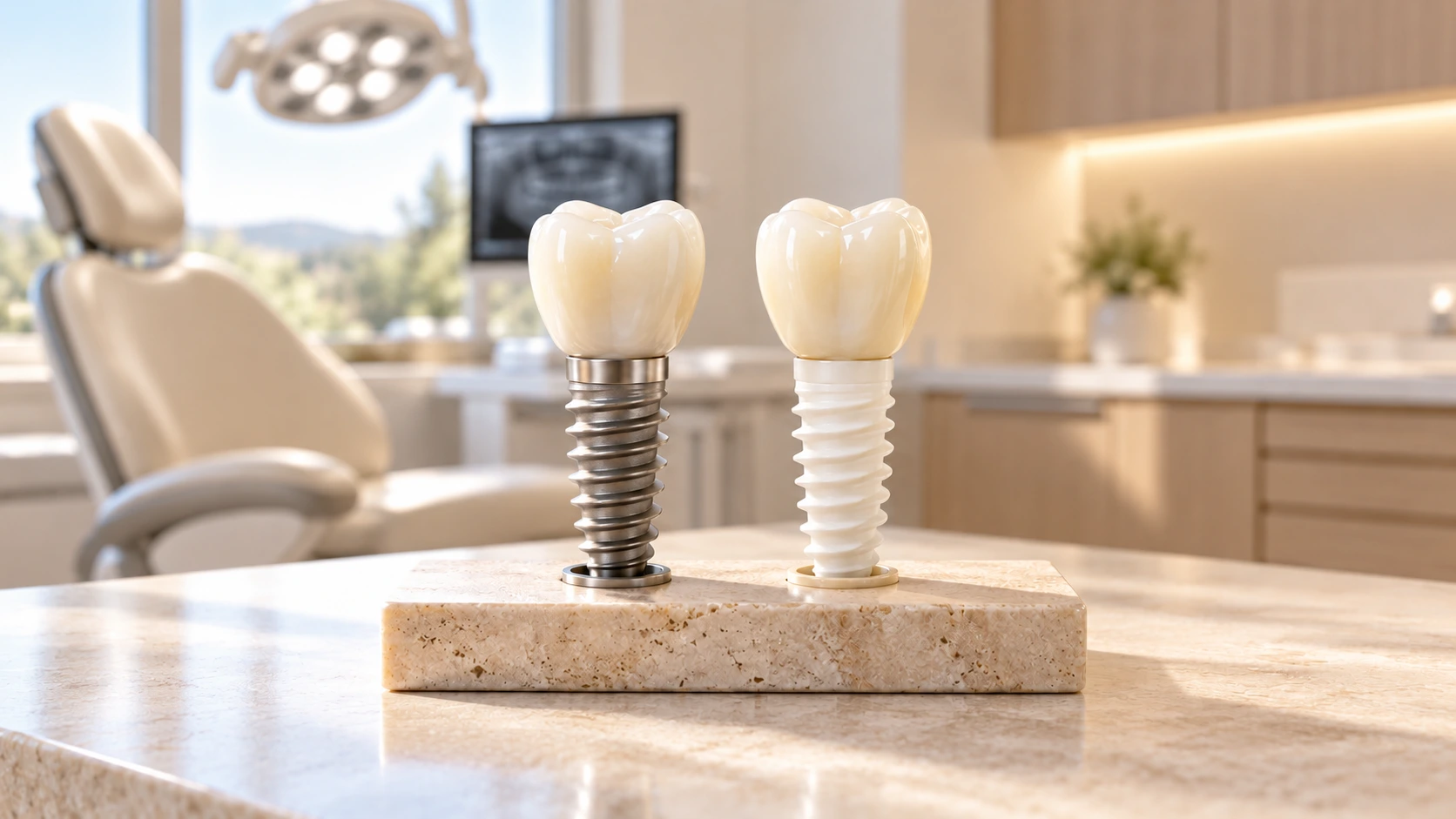
No. Dental implant materials usually fall into two main groups: titanium-based metals and zirconia ceramic. Both can replace a missing tooth root, but they differ in composition, color, and available designs. There’s another detail worth knowing: the implant beneath your gums and the tooth you see above them may be made from different materials.
That means “What is my implant made of?” deserves a more complete answer than “It’s a white tooth.” Understanding the individual parts helps you compare treatment plans and make your preferences clear before treatment begins.
One Replacement Tooth, Several Different Parts
People often call the entire replacement tooth an implant. Your dental team may use that word specifically for the part placed in your jawbone. A typical restoration includes:
- The implant body: The foundation in the jaw that replaces the missing root.
- The abutment: A connector that supports the replacement tooth. Some designs combine this with the implant body.
- The crown: The visible tooth, shaped to fit your bite and blend with your smile.
Some systems also include a small connecting screw. Ask about each component, especially if avoiding metal is important to you. A zirconia crown can sit on a titanium implant, so the crown’s material alone does not tell you what is underneath.
Titanium Dental Implant Materials: Pure Metal and Alloys
Titanium has a long history in implant dentistry. It is a metal that can integrate with bone, creating a foundation for a replacement tooth. Titanium systems also offer a broad range of components and restorative options.
However, “titanium implant” does not describe one identical formula. Some implants use commercially pure titanium, while others use titanium alloys—mixtures of titanium and other elements.
One example is a titanium-zirconium alloy. Despite the similar names, a titanium-zirconium implant is metallic; a zirconia implant is ceramic. If you’re comparing recommendations, ask for the exact material and implant system rather than relying on a shortened description.
Zirconia Dental Implants: The Ceramic Alternative
Zirconia, also called zirconium dioxide, is a high-strength ceramic used for dental implants. Although it is produced from a metallic element, the finished oxide ceramic has different properties and is considered a nonmetallic implant material.
Its tooth-like color can be appealing when appearance near the gumline matters. It also offers an option for patients who prefer a ceramic implant body.
Zirconia still requires careful case selection. Implant position, available space, bite forces, and the planned restoration all influence whether a particular system is suitable. You can read more about our approach to zirconia implant restorations and what treatment involves.
Does “Zirconia” Always Mean Completely Metal-Free?
Not necessarily. Some two-piece zirconia systems use an internal metal screw to join their components. Other systems use different connection designs.
If your goal is a fully metal-free restoration, ask a specific question: “Do the implant body, connector, connecting screw, and crown contain any metal?”
That question is particularly useful when comparing estimates. Two treatment plans described as “zirconia” may refer to different parts of the finished tooth.
Which Material Is Better for Your Smile?
Both titanium and zirconia can be appropriate options. Titanium has the longer clinical track record, while zirconia provides a ceramic alternative for selected cases. Research on zirconia is encouraging, but evidence varies by implant design, and newer two-piece systems have less long-term follow-up.
The most useful comparison starts with your mouth:
- Tooth location: A front tooth brings different appearance concerns than a back tooth.
- Bone and spacing: These affect the implant dimensions and position that can be used.
- Your bite: Grinding, clenching, and chewing forces influence planning.
- The replacement being supported: A single crown, bridge, and full-arch restoration have different requirements.
- Your preferences and health history: Material concerns belong in the conversation from the beginning.
A strong treatment recommendation should explain why a particular system fits these needs, including its limitations.
Biocompatibility Matters—But Labels Have Limits
Biocompatibility describes how a material interacts with living tissues. Both titanium and zirconia are used because they can be compatible with the body. Neither “metal” nor “ceramic” alone tells you how successful your individual treatment will be.
Titanium intolerance appears uncommon. If you have a history of reactions to metals or dental materials, explain what happened and whether you received a diagnosis. Your dental team can decide whether specialist input or further evaluation would be useful.
Choosing zirconia also does not eliminate the possibility of inflammation around an implant. Current clinical evidence does not establish that it prevents peri-implantitis better than titanium. Healthy gums, accessible cleaning, and ongoing professional care remain essential with either material.

Material Is One Part of a Holistic Treatment Plan
A holistic approach considers your material preferences alongside your oral health, medical history, comfort, and ability to maintain the finished restoration.
Before treatment, your team should assess the condition of your gums and supporting bone, review relevant medications and health conditions, and discuss habits that could affect healing. Smoking and poorly controlled diabetes, for example, can complicate implant care.
At Natural and Cosmetic Dentistry, our implant restoration planning includes considering how the replacement tooth will look, function, and fit your overall care. Surgical placement is coordinated with a surgical provider, followed by restoration once the implant is ready.
What Should You Ask Before Accepting an Implant Estimate?
An estimate should help you understand the complete treatment, including the parts you won’t see in your smile. Useful questions include:
- What brand, model, and material are planned for my implant?
- What are the connector, screw, and crown made from?
- Why does this system suit my tooth location and bite?
- Will I need an extraction, bone graft, or temporary tooth?
- Does the estimate include surgery, the connector, and the final restoration?
- What maintenance or future repairs might be needed?
Cost depends on more than the material. The number of teeth being replaced, preparatory procedures, and restoration design all affect the total. Comparing complete plans makes the numbers more meaningful.
Frequently Asked Questions
How can I find out what my existing implant is made from?
Ask the office that placed it for your implant records, including the manufacturer, model, and component details. Keep a copy for future dental care. An X-ray can help assess an implant, but it may not identify its exact composition.
Should I replace a titanium implant just because it contains metal?
A comfortable, healthy, functioning implant does not automatically need replacement because it is titanium. Removal involves surgery and potential bone loss. If you have symptoms or material concerns, get an evaluation before deciding on treatment.
Does a ceramic implant heal faster?
You cannot reliably predict healing time from the material alone. Bone condition, implant stability, additional procedures, and your health all help determine when the implant can support its final restoration.
Can a dental implant get a cavity?
The implant itself does not develop tooth decay. However, the surrounding tissues can become inflamed or infected. Daily cleaning and professional maintenance are still necessary.
What if my implant starts feeling loose?
Contact your dental provider promptly. Looseness may involve the crown, a connecting component, or the implant itself. Avoid chewing on that area until it has been assessed.
Know What’s Going Into Your Smile
You don’t need to become a materials expert to make an informed decision. You do deserve to know which dental implant materials are being recommended, what each component contains, and why the plan fits your needs.
At Natural and Cosmetic Dentistry in Clearwater, we can discuss your restoration options and help you understand the next steps. Call (727) 888-6523 to start the conversation about replacing a missing tooth.
