
Better Breathing Supports Restores Strengthens Transforms Your Sleep & Whole-Body Health
Airway Dentistry in Clearwater, FL
Breathing should feel effortless, and sleep should leave you feeling restored. But when the airway is narrow or breathing becomes disrupted during sleep, the effects can show up in unexpected ways—from snoring and restless nights to daytime fatigue, jaw tension, headaches, and difficulty concentrating.
At Natural and Cosmetic Dentistry in Clearwater, we look beyond the teeth to understand how the airway, jaws, tongue, bite, and oral structures work together. Our approach to Airway & Sleep Dentistry focuses on identifying possible barriers to healthy breathing and creating personalized treatment options designed to support better sleep, comfortable function, and whole-body health.

Your Airway Affects More Than Your Sleep
Snoring may be the symptom everyone hears, but airway-related problems can be much quieter. Mouth breathing, waking with a dry mouth, restless sleep, morning headaches, jaw tension, and feeling tired after a full night in bed can all be reasons to take a closer look at nighttime breathing.
For children, the clues may look different. Restless sleep, mouth breathing, frequent waking, bedwetting, teeth grinding, difficulty concentrating, or changes in facial and jaw development may warrant further evaluation.
Signs worth paying attention to include:
- Loud or frequent snoring
- Mouth breathing during the day or at night
- Waking with a dry mouth or headache
- Tossing, turning, or frequently waking
- Teeth grinding or nighttime jaw tension
- Daytime sleepiness, brain fog, or poor concentration
- Feeling like you slept—but never truly rested
These symptoms do not automatically mean you have sleep apnea. They are clues that can help determine whether further airway or sleep evaluation makes sense.
What Does Dentistry Have to Do With Your Airway?
Quite a lot. Your teeth sit inside a larger system that includes your jaws, palate, tongue, nasal passages, facial muscles, and airway. The size and position of these structures can influence how easily air moves while you are awake and asleep.
That is why airway dentistry goes beyond checking teeth and gums. We may also look at:
- The width and development of the upper and lower jaws
- Palate shape and available tongue space
- Tongue posture and function
- Dental crowding and bite relationships
- Signs of mouth breathing
- Jaw position during sleep
- Oral structures that may be associated with restricted airflow
The goal is to understand the whole breathing system, rather than focusing on a single symptom such as snoring.


How We Evaluate Breathing and Sleep
There is no single test that tells the entire story. An airway evaluation brings several pieces of information together to understand what may be contributing to disrupted breathing.
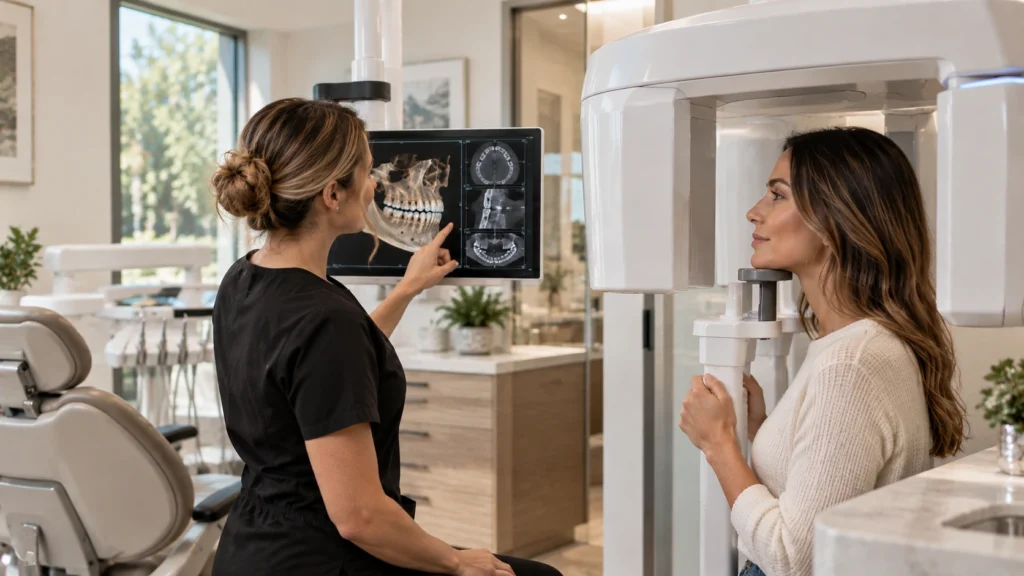
Depending on your symptoms and needs, your evaluation may include a detailed health and sleep history, examination of the mouth and airway, digital scans, photographs, and 3D CBCT imaging to evaluate oral and craniofacial anatomy.
When appropriate, we may also recommend a home sleep test to collect information about breathing and sleep in your own bed.
The important part comes next: connecting those findings. Instead of treating one scan, one number, or one symptom, we use the information together to determine appropriate next steps.
Airway Treatment Is Not One-Size-Fits-All
Two people can both snore for very different reasons. That is why airway treatment should begin with understanding the individual—not choosing an appliance first.
Depending on the findings, age, development, symptoms, and any medical sleep diagnosis, care may involve:
- Oral appliance therapy designed to position the jaw during sleep
- Palatal or dental expansion when development and available oral space are concerns
- Myofunctional support to address tongue posture and oral muscle function
- NightLase® therapy when clinically appropriate
- Frenectomy when a restrictive oral tissue attachment is contributing to functional concerns
- Collaboration with sleep physicians, ENTs, orthodontists, or other healthcare providers when needed
Some patients need one approach; others benefit from several coordinated steps. Treatment recommendations are based on the underlying findings and are personalized to the patient.


Airway Dentistry for Children: Why Earlier Can Matter
A child who snores, sleeps with an open mouth, or breathes through the mouth regularly is worth paying attention to. Children are still developing, which means breathing patterns, tongue posture, and jaw growth can interact during important stages of facial and dental development.
Parents may notice:
- Sleeping with the mouth open
- Snoring or noisy breathing
- Restless or unusual sleeping positions
- Teeth grinding
- Crowded teeth or a narrow-looking smile
- Difficulty keeping the lips comfortably closed
- Daytime tiredness or trouble concentrating
An airway-focused dental evaluation does not assume these symptoms have one cause. Instead, it helps identify oral and structural factors that may deserve attention and whether another healthcare provider should be involved.
Early evaluation can provide something valuable even when treatment is not immediately necessary: a clearer picture of how your child’s mouth, jaws, and breathing are developing.
What to Expect at Your Airway & Sleep Consultation
You do not need to know whether your problem is your airway, your jaw, your sleep—or something else—before making an appointment. That is what the evaluation is designed to investigate.
We start by listening. Tell us about your sleep, breathing, snoring, energy levels, headaches, jaw symptoms, or anything you have noticed in yourself or your child.
From there, appropriate diagnostic information can be gathered and reviewed. If additional testing or another provider is needed, that becomes part of the conversation.
By the end of the process, our goal is for you to understand:
- What we found
- What those findings may mean
- Whether additional evaluation is appropriate
- Which treatment options may apply to you
- What the next step looks like
No guessing and no generic sleep solution—just a plan based on your individual findings.


Better Sleep Starts With Better Breathing
A full night’s sleep should leave you feeling refreshed, not wondering why you’re still exhausted. If snoring, mouth breathing, teeth grinding, or restless nights have become your normal, your airway may be part of the picture.
At Natural and Cosmetic Dentistry in Clearwater, we look beyond the teeth to understand how your jaw, tongue, oral structures, and breathing patterns may influence your sleep. Our personalized approach to airway and sleep dentistry focuses on identifying potential concerns and helping you understand your options, with collaboration from sleep specialists and other healthcare providers when needed.
You deserve more than another tired morning. Sometimes, the first step toward better sleep is understanding what happens when you close your eyes.
Ready to take a closer look at your breathing and sleep? Call (727) 888-6523 to schedule an airway and sleep evaluation.
How Can We Help?
Have a question about your care? Our team is happy to help.
Frequently Asked Questions
What is airway and sleep dentistry?
Airway and sleep dentistry looks at how the mouth, jaws, tongue, palate, and other oral structures may influence breathing, particularly during sleep. The goal is to identify dental or structural factors that may contribute to poor airflow and determine whether dental treatment, sleep testing, or collaboration with another healthcare provider is appropriate.
How do I know if I may have an airway problem?
Possible signs include frequent snoring, mouth breathing, restless sleep, waking with a dry mouth, morning headaches, teeth grinding, daytime fatigue, and difficulty concentrating. These symptoms can have many causes, so an evaluation is important rather than assuming they are caused by an airway problem.
Can a dentist diagnose sleep apnea?
A dentist can screen for signs and risk factors associated with sleep-disordered breathing and help arrange appropriate testing, but the diagnosis of obstructive sleep apnea is made by a qualified medical provider based on appropriate sleep testing and clinical evaluation. If sleep apnea is suspected, coordinated medical and dental care may be recommended.
Why would I need a home sleep test?
A home sleep test can provide information about what happens to your breathing while you sleep in your normal environment. Depending on your situation, sleep testing may help determine whether breathing interruptions are occurring and whether further medical evaluation or treatment is needed.
Can snoring be treated without a CPAP machine?
Sometimes. The appropriate treatment depends on why you are snoring and whether obstructive sleep apnea or another sleep-related breathing disorder is present. Some patients may be candidates for an oral appliance or other airway-focused treatment, while others may need CPAP or another medical approach. An evaluation helps determine which options are appropriate.
What is an oral sleep appliance?
An oral sleep appliance is a custom device worn during sleep. Certain appliances gently reposition the lower jaw to help maintain a more open upper airway. They may be appropriate for certain patients with snoring or obstructive sleep apnea following proper evaluation and diagnosis.
Can a narrow palate affect breathing?
A narrow upper jaw can be associated with reduced space in the mouth and may occur alongside nasal breathing or airway concerns. However, anatomy varies considerably from person to person. We evaluate the palate, jaws, bite, tongue space, breathing patterns, and other findings together rather than using palate width alone to determine treatment.
What does a CBCT scan show during an airway evaluation?
A CBCT provides a three-dimensional view of the teeth, jaws, nasal structures, and surrounding anatomy. It can provide useful information for airway-focused treatment planning, but an airway image by itself cannot diagnose sleep apnea. Sleep symptoms, examination findings, and appropriate sleep testing all contribute to the bigger picture.
Do you provide airway dentistry for children?
Yes. An airway-focused evaluation can be useful when a child regularly mouth breathes, snores, grinds their teeth, sleeps restlessly, has dental crowding, or shows other possible signs of breathing difficulties. Because children are still developing, recommendations are individualized and may involve collaboration with pediatricians, ENTs, orthodontists, or other providers when appropriate.
What treatments are available for airway and sleep concerns?
Treatment depends on the cause, age, anatomy, development, and sleep findings. Options may include oral appliance therapy, orthodontic or palatal expansion, myofunctional support, NightLase®, frenectomy, or coordinated care with other healthcare professionals. Not every treatment is appropriate for every patient.
What happens at an airway and sleep consultation?
We begin with your concerns, symptoms, sleep history, and health history. Your evaluation may include an examination, digital scans, photographs, 3D imaging, and sleep testing when appropriate. Once the information is reviewed, we can explain what we see and discuss reasonable next steps rather than starting with a predetermined treatment.
When should I schedule an airway evaluation?
Consider an evaluation if you or your child regularly snores, mouth breathes, sleeps restlessly, wakes with headaches or a dry mouth, grinds the teeth at night, or continues to feel unusually tired despite getting adequate hours of sleep. If you already have a sleep apnea diagnosis and want to understand whether dental treatment could play a role in your care, an airway consultation can also help clarify your options.
Our Latest
Holistic Dentistry Articles
Your Root Canal Still Hurts. Now What?

Dental Implant Materials: Titanium vs. Zirconia

Tongue-Tie Symptoms After Release: Does Your Child Need Another Procedure?
Dental CBCT vs X Rays: What’s the Difference?

Tongue-Tie and Frenectomy: What Patients Should Know

The doctors at Natural and Cosmetic Dentistry
Dr. Mikey, Dr. Carlson and Dr. Luo